
Nucleic Acids
Fluorescence-based determination and detection of DNA and RNA using solution fluorimetry, gel and capillary electrophoresis, fluorescence microscopy, and flow cytometry.
Research Area · 02
Design of fluorescent molecules for biological and diagnostic applications.
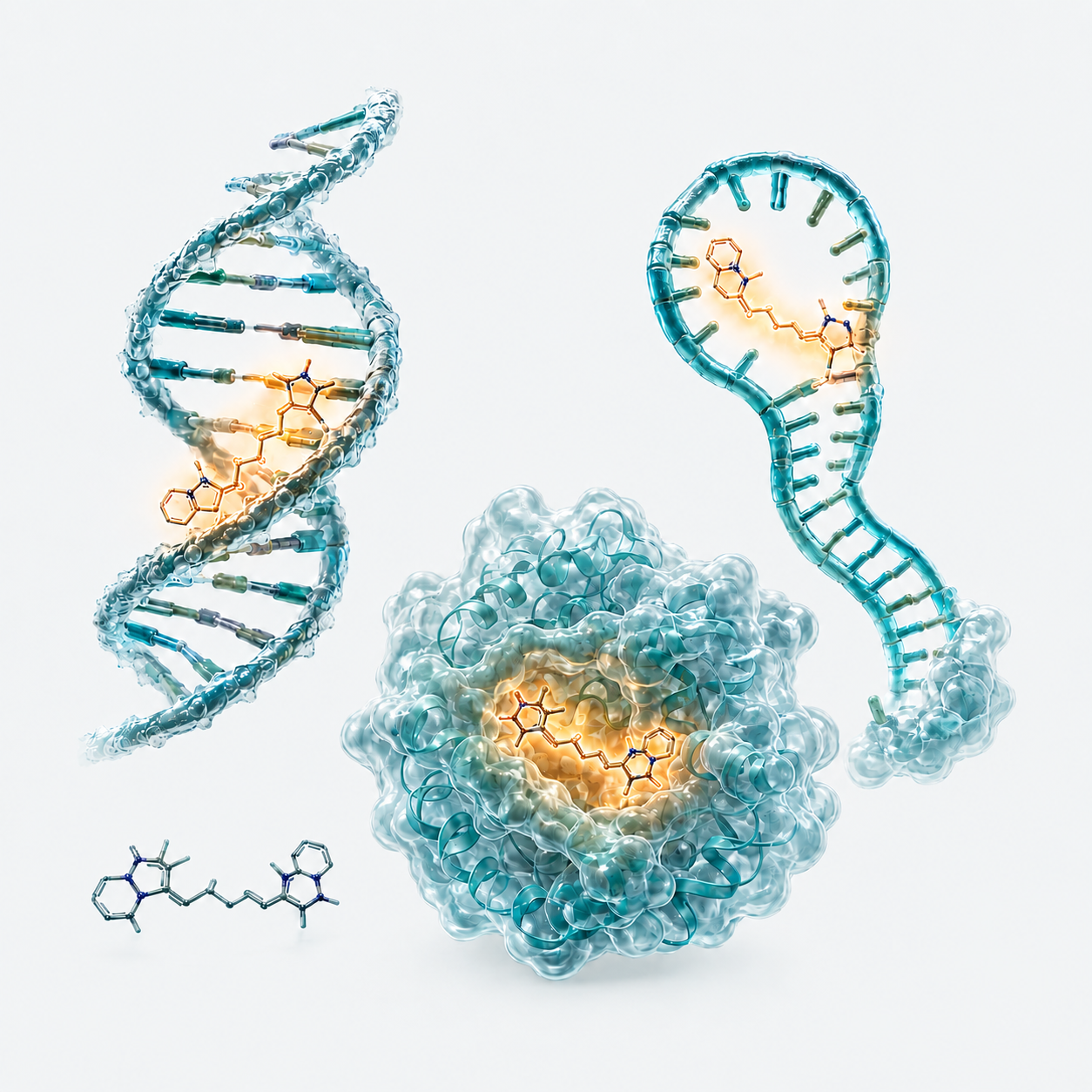
Fluorescence enables the detection of binding, aggregation and conformational changes in biomacromolecules. We work with monomethine, trimethine, dioxaborine and other dye classes and compare their spectral responses in different biological systems.
Fluorescence-based determination and detection of DNA and RNA using solution fluorimetry, gel and capillary electrophoresis, fluorescence microscopy, and flow cytometry.
Probes for detecting proteins, partially denatured conformations and β-sheet aggregates.
Development of long-wavelength cyanine dyes for highly sensitive fluorescence detection of biomolecules, cellular structures, and parameters of the biological microenvironment.
We create dyes and molecular probes for proteins, nucleic acids and biomolecular aggregates and study their interaction mechanisms.
Selection of the chromophore, substituents and spectral range for a specific biological application.
Use of more than a thousand dyes from our in-house collection and, depending on the project objective, synthesis of new series of related structures for systematic study and comparison of their properties
Absorption, emission, quantum yield and signal changes in the presence of the target biomacromolecule.
Assessment of selectivity, sensitivity and suitability for a specific biomedical application.
Dyes for fluorescence detection of nucleic acids and proteins
Long-wavelength probes for proteins, conformational changes and β-sheet aggregates.
Fluorescent reagents for PCR and analytical systems.
Cyanine and other fluorophore classes tailored to specific molecular targets and analytical tasks.
Learn moreThe developed probes, dyes and detection methods are presented in the Department’s publications.
Learn moreLet’s Collaborate
Reagents for molecular labelling, diagnostics, PCR and fluorescence-based analytical systems.
Discuss a Collaboration