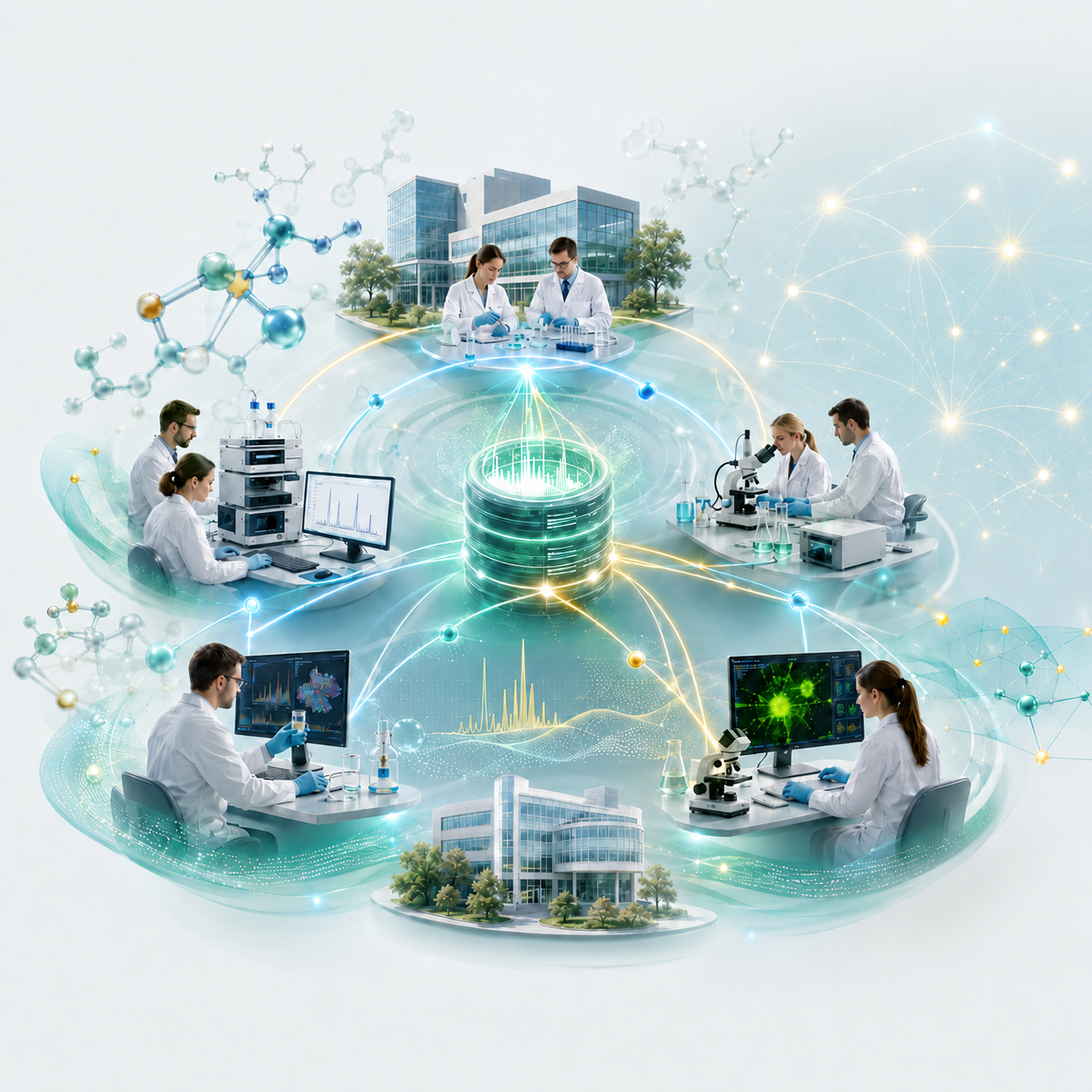
By joining forces with Ukrainian research institutions, we build resilient partnerships, uphold rigorous analytical standards and systematic research practices, and support the integration of Ukrainian science into the European Research Area.
The Department collaborates with Ukrainian and international academic institutions, healthcare organizations, and research institutions. Joint projects encompass fundamental and applied research in biomedical chemistry, including the development of bioactive compounds and fluorescent probes, as well as natural product research.
Department of Cell Population Genetics, Institute of Molecular Biology and Genetics, NAS of Ukraine
We collaborate with the Department of Cell Population Genetics at the Institute of Molecular Biology and Genetics, NAS of Ukraine. Our joint projects focus on medicinal-plant biotechnology and tissue culture, including biomass accumulation and the production of bioactive compounds such as naphthoquinone pigments in E. plantagineum. These studies integrate cell and molecular biology, natural-product chemistry and pharmacology, using LC–MS and GC–MS to characterize the chemical composition of medicinal-plant tissue cultures and assess their biotechnological potential.
The Department of Protein Synthesis Enzymology, Institute of Molecular Biology and Genetics, NAS of Ukraine
This collaboration focuses on developing aminoacyl-tRNA synthetase inhibitors as potential anti-tuberculosis agents with a reduced risk of resistance.
The Department of Protein Synthesis Enzymology produces recombinant enzymes, screens chemical compounds, and investigates their structures using cryo-electron microscopy.
The Department of Biomedical Chemistry contributes molecular modelling, molecular docking, molecular dynamics simulations, and binding-energy analysis to interpret structural data, assess mutation effects, conduct virtual screening, and prioritize promising inhibitors for experimental testing.
Department of Colour and Structure of Organic Compounds, Institute of Organic Chemistry, NAS of Ukraine
This collaboration focuses on the development of monomethine cyanine fluorescent probes for sensitive nucleic acid detection, quantitative real-time PCR and cell-free DNA analysis.
Researchers at the Institute of Organic Chemistry perform the rational design, preparative synthesis and structural optimization of cyanine dyes. The Department of Biomedical Chemistry at the Institute of Molecular Biology and Genetics, NAS of Ukraine, investigates their spectroscopic and luminescence properties, interactions with biomacromolecules and suitability for PCR applications.
The collaboration integrates fine organic synthesis with fluorescence analysis and molecular biology validation to develop effective domestically produced reagents for molecular diagnostics.
Department of Functional Genomics and Cancer Progression, R. E. Kavetsky Institute of Experimental Pathology, Oncology and Radiobiology, NAS of Ukraine
The collaboration focuses on the experimental evaluation of the anticancer activity of small molecules and the investigation of their mechanisms of action.
The Department maintains a collection of more than 250 cell lines representing diverse molecular subtypes of breast, ovarian and prostate cancer. Its research infrastructure supports the assessment of cell viability and proliferation, apoptosis, cell-cycle distribution, epithelial–mesenchymal transition, migration and invasion, as well as studies using three-dimensional tumor models.
The Department of Biomedical Chemistry at the Institute of Molecular Biology and Genetics, NAS of Ukraine, performs computational selection, medicinal chemistry optimization, synthesis and analytical characterization of candidate compounds. Selected compounds are provided to the partner team for biological testing, confirmation of anticancer activity and elucidation of the underlying molecular mechanisms.
University of Agricultural Sciences and Veterinary Medicine of Cluj-Napoca, Romania
The Romanian partner contributes transcriptomic analysis, long non-coding RNA profiling and the modelling of regulatory networks integrating coding and non-coding RNAs. These studies are conducted in selected responsive and resistant tumor models.
The integration of omics and functional data enables the identification of molecular mechanisms associated with treatment response and resistance and supports the discovery of potential pharmacodynamic biomarkers.
The Department of Biomedical Chemistry at the Institute of Molecular Biology and Genetics, NAS of Ukraine, performs the computational selection, synthesis and medicinal chemistry optimization of active compounds and provides chemical and experimental data for subsequent transcriptomic and biomarker analyses.
Military Institute of Medicine, Warsaw, Poland
The Polish partner coordinates the integration of the computational and biological stages of the research. Its contribution encompasses pharmacophore modelling, similarity-based screening, molecular docking, molecular dynamics, QSAR and machine-learning prediction, and ADMET assessment of candidate compounds.
The Institute’s expertise in TCTP biology, cell-cycle regulation and apoptosis supports the interpretation of experimental findings and the investigation of the mechanisms of action of active molecules.
The Department of Biomedical Chemistry at the Institute of Molecular Biology and Genetics, NAS of Ukraine, provides access to its proprietary compound library and performs virtual screening, medicinal chemistry optimization, organic synthesis and analytical characterization of selected compounds.
Let’s Collaborate
We welcome collaboration on interdisciplinary biomedical research.
We are open to collaboration in joint research and applied projects, spanning computational modeling, analytical studies, and hypothesis testing to the publication of findings, joint grant applications, and product development.